Monday, December 4, 2017

Community calls for Compassion and Hospitality

The beginning of winter can be hard.  It's darker, colder, and the shiny start to a new year has worn off.  Trees look bare, the skies grey.  Christmas is not here yet, and the stress of the season is building.  It's well known among mental health professionals that November is a difficult month for many.
This isn't the case for everyone, of course.  Some of us long for the change in season, the rhythm of the year to continue, the excitement of celebrations around our Saviour's birth.  That can and sometimes does make the contrast even more difficult.
Over the past month, I've asked specific groups of people (leadership, staff, students) the following question:  "If you could describe NACE to someone who doesn't know about us, what three words or phrases would you use?"  It's obvious we are a school, but beyond that, what sets us as unique or different?  The responses, of course, were great to read through and among what anyone would expect, there were some surprising elements as well.
The most frequently mentioned word?  Community.  Many of the students, staff, parents at NACE feel like they belong.  What an incredible identification of a body of Christ!  Yet, whenever we talk about community and belongingness, there are always those who don't or those who struggle to connect or have too much going on that they feel they can't.  Still others have difficulty with the season and their own mental health
As a community, especially a community with Christ at the centre, compassion needs to play a central role in our identity.  How do we exercise hospitality to everyone in our midst?  Sometimes it's just being aware that others may feel on the outskirts.  At other times, it means that we go out of our way to connect with people who we haven't met yet.  Including everyone means that we will make space for others.  A feeling of belonging happens when we miss someone if they aren't there.  Who is missing?  Who is struggling?  It's November.  Go out of your way in the next few weeks to make sure we live up to our descriptors!
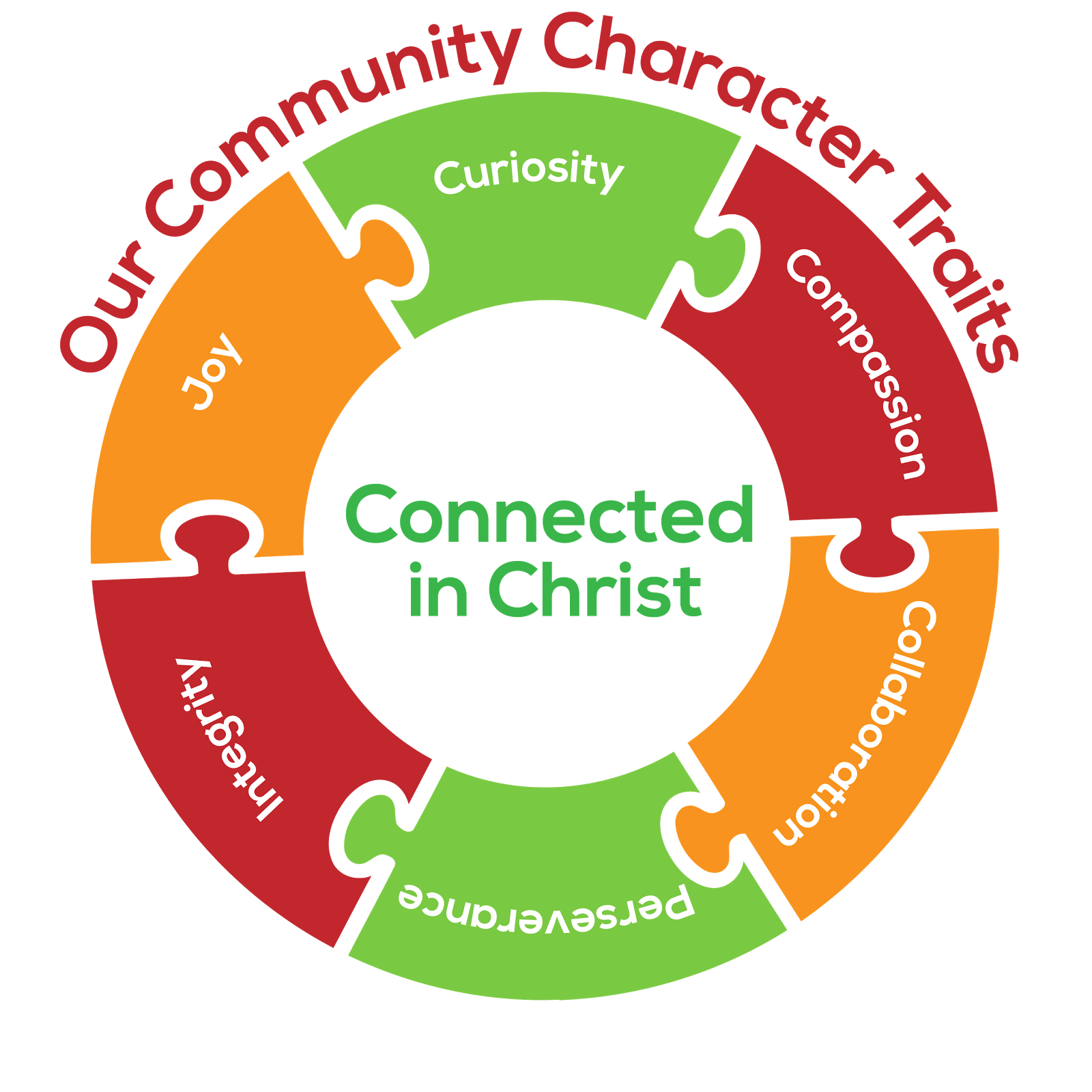
We are a community, Connected in Christ.

Friday, November 17, 2017

Integrity

"Integrity means that you will do good when no one is watching." This is what one of our grade one students shared in their journal this past week.

There is a host of ways we can think of integrity and many ways to define it, but at the heart of the word, is the kernel of honesty. I wonder if some of us think of integrity as doing the right things, or even to a more basic level 'to behave'. While this may be the case, we need also to acknowledge that we are a broken and fallen people. We mess up. Often. So what happens when we do? What does integrity look like when we fall short of acting in the right way or doing the right thing?

Many of you reading this will be familiar with the cartoon characters that pace about, trying to make a decision. On one shoulder sits a devil, and the other an angel, each whispering their encouragement to decide. Without making our day-to-day decisions too trivial, one step toward integrity is acknowledging that God is there to encourage and support our decisions.

Thankfully, God meets us at whatever point we are in our Christian walk. Paul outlines his own journey in his letter to the Galatians, and that struggle: Galatians 1:10 "Obviously, I'm not trying to win the approval of people, but of God. If pleasing people were my goal, I would not be Christ's servant." So even in a Christian community, we will find ourselves struggling with what is right.

The wisdom shared by the grade one student is apt here. Who are we trying to please? Ourselves? Others? What would God have us do?

If we are honest, we will need to acknowledge wrongdoing. We will also need to acknowledge that at times we twist and use others to our own benefit.

How, then, do we teach integrity to our students, and in the school community? We remind one another that we need to be forgiven, and we also extend forgiveness with encouragement to live for Christ, not for others. Integrity is continuing to grow in our choices so that they remain honest, no matter who is watching.

Proverbs 21:3 "To do what is right and just is more acceptable to the LORD than sacrifice."

The Heart of a Community

"Voluntarism is dying". This quote departs from the lips of many in leadership positions within non-profit sector organizations. Perhaps it is more difficult to find people to do specific tasks, or perhaps leaders just grumpily pine for a day gone by where people just freely gave of their time and knew how to commit, or maybe we find ourselves increasingly busy with life and there are more avenues to give of our time and less time in which to do it...... I'm not sure.

As I write this, large quantities of apples, pie crust and crumble, boxes piled high all await dozens of people who will cheerfully give of their time to make apple pies for our annual fundraiser. Others gave of their time these past two weeks to serve on a committee to get our Family Fun Fest going, or on the board of directors to chart our path forward. Volunteers spend time with kids who need some extra assistance in their learning, or to assess reading skills for a teacher who can then tailor instruction to the class needs. Volunteers build things, like decks. They fill holes, cut grass and landscape, run wires and install fixtures, they paint and organize golf tournaments, coach sports teams and build parade floats, they sort items in a store for reclaimed construction materials.

It's clear that NACE is a community of dedicated people passionate about the work we do. A volunteer who can see that peeling an apple, or attending a meeting translates into lights on in classrooms, financial assistance for those who need it, or the lesson that cuts to the heart of a child and convicts them that God loves them and they have a specific purpose for His glory in the world.... that is a cheerful giver. The blessing of doing that shoulder to shoulder spreads our vision as a community and deepens our commitment to Christ in Education. It connects us in Christ.

As you read this, please do two things: 1) thank God for the many people in our midst who cheerfully give of their time to keep our schools running effectively and affordably, and 2) consider the upcoming tasks that never seem to end or present themselves, and decide what you might be able to do to connect yourself to others in Christ. Some are inspiring and some are mundane, but all of them connect us to the heart of what we do: teach kids to Live for Jesus, Learn for Life, and Serve with Gladness.

2 Corinthians 9: 6-7 " The point is this: whoever sows sparingly will also reap sparingly, and whoever sows bountifully will also reap bountifully. Each one must give as he has decided in his heart, not reluctantly or under compulsion, for God loves a cheerful giver."

Collaboration

A buzz word in education right now is '21st-century skills'.  Any learning plan that is launched by an educational institution seems to include this as a necessary element.  I'm not sure how long we'll talk about these as '21st-century' items, but the list often shifts away from the need to learn 'stuff' and de-emphasizes cramming in content.  

It's no secret that the workplace is changing, and our students need to know how to access and work with technology.  The other large area of identifiable skills surround social and emotional skill sets and being able to work well with others; to collaborate.  Increasingly, we and our students need to be able to work together on a project towards a shared goal.  Being able to work on one's own is important, but fewer and fewer scenarios demand this type of work anymore.  Teamwork is essential to life.  It's why it was an important inclusion in our Community Character traits that push us toward being 'Connected in Christ'.  Chris Breitenberg writes a beautiful article on how collaboration is central to the gospel of Christ and how the future of the church depends on it.  I commend the article to you!  https://goo.gl/dG3Zqa

As we prepare for upcoming strategic planning, I'm asking people in our community 'What does it look like when we do our best work?'  As the NACE board answered these questions, it struck me at how many times they referenced community events and tasks where groups of people came together and accomplished something in service to our schools.  There's something that is innately joyful about serving alongside one another to 'get something done'.  Indeed, I believe there is something Holy about this time together - dedicated to the furtherance of the good news through education.  As we gather together to work, we build relationship, we build the church, and we build something bigger than all of us - a present and a future of God's kingdom!!

Our event organizers know this inherently and are inviting you to collaborate with them.  A Family Fun Fest runs because people pitch in for a great cause.  Pies get made, peaches get peeled, committees function and get work done..... Beautiful things happen when we collaborate and work together.

I look forward to seeing all of you at our Family Fun Fest on Saturday, November 11, all pitching in joyfully to build up our schools in service to the God we serve!!

Remembering

November is a time when we collectively as a country stop, stay silent and remember the dedication and sacrifice of others in times of conflict around the world.  Schools are amazing places to ensure that we learn about the significance of peacekeeping around the world and our responsibility to be agents of peace.

As Christian Schools and communities, we are blessed beyond measure as we process the events in our world that have and continue to show pain and suffering in the face of injustice, wrongdoing, and evil.  We know that as agents of peace, we ultimately serve the Prince of Peace, the King of Kings.

This past week, we were learned through the participation of veterans, interaction with local Legions, the preparation of band pieces, dramatic vignettes, and art projects that helped us ask questions and delve into the meaning of sacrifice and justice and how to respond to the problem of evil in the world.  In a Christian school, we are able to process together with students and in community, singing and remembering together that we have a 'Saviour, who is mighty to save'.

As we pause for a moment of silence this weekend to remember those who served and sacrificed for our freedom, may we be reminded of God's continued work of restoration in the world.  The words of Saint Francis are an apt reminder of this paradox and call:

Lord, make me an instrument of your peace:
where there is hatred, let me sow love;
where there is injury, pardon;
where there is doubt, faith;
where there is despair, hope;
where there is darkness, light;
where there is sadness, joy. 

O divine Master, grant that I may not so much seek
to be consoled as to console,
to be understood as to understand,
to be loved as to love.
For it is in giving that we receive, 
it is in pardoning that we are pardoned, 
and it is in dying that we are born to eternal life.

Friday, October 20, 2017

Complaining or Communicating?

As we learn some of our community character traits this year, connected in Christ, there are times when we will notice that there is an intersection of a few of them resulting in new discoveries.

Last week I wrote about compassion, how vital it is, but how difficult it can be as well.  In light of how our contemporary society works, compassion for those with whom we have a problem or issue is counter-cultural.  Our culture tells us that when we disagree or have an issue with someone, the proper way to go about it is to either a) put up a public and vocal protest about it (social media makes this even easier than ever before), or b) to 'suck it up' and move on.

Honesty and Integrity, as well as collaboration, are other traits we are looking to deliberately focus on and develop in our students and in our community.  A few times a year, I hear the phrase: "We didn't want to be the complainers....." or "I would have told you about this sooner, but I didn't want to bother you...."  I know the principals hear this as well.  

If we have an issue with someone, one of the easiest things we can do is discuss it with close friends.  While this can be healthy, we need to watch closely that our discussions remain guarded to protect everyone.  If there is something bothering you, as soon as possible, take it up with those involved.  Problems are dealt with appropriately, quickly, and the right information can come to light.

Proper handling of conflict or issues is an act of compassion, an act of collaboration, and an act of integrity.  While it may seem odd to suggest that complaining or stating that something isn't right is compassionate, the alternative is far worse.  If we allow conflict or issues to fester or spread without being dealt with, they can become toxic, fodder for gossip, and destructive to anyone involved as well as to our community.  

Attached to today's newsletter is NACE's dispute reconciliation policy.  This policy applies and involves everyone in our community - employees, parents, supporters, and board members.  Please review it so that you know how to issues should they arise, but also so that you can encourage others to deal with them appropriately.  'Have you talked to _____________ about this?' should be a quick reminder to one another to resolve problems.   Matthew 18 provides sound advice from scripture not only to settle disputes but also to proactively protect the Christian community from itself as we know we all fall short at times.  Speaking the truth in love is a habit that goes a long way to developing character and a growing healthy community of learning that is connected in Christ.

Compassion


Compassion seems simple. On the surface, compassion is a trait in which we feel sorry for someone and try to help. This wouldn't be wrong, but there is so much beyond a simple empathetic posture that is embodied in a character trait of compassion.

As we move through some of our 'Connected in Christ' character traits, they align well with how we understand the course of God's redemptive hand in history (some of you will know this as the creation-fall-redemption framework). God's creation gives us reason to be curious and to delight in his work. Our story takes a turn, however.... because of humanity's decision to disobey and to move away from God, we live in broken relationship with Him and with the world. There is hurt, there is pain, there is suffering. In fact, scripture describes the world as 'groaning' under the weight of our sin (Romans 8:12)

This calls for a response. God showed His compassion by designing a rescue plan for us and for his world. He calls us to exhibit also this compassion for creation, and for one another.

Students and teachers deal with this on a regular basis in their classrooms. On some level, it is easy to have compassion for the person who is seeking help and wanting to be assisted. It makes us feel good to help. What is it like to have compassion for the person who doesn't want or feel they need it? How about the person we don't know or feel threatened by? So much of our world right now lives in a tension of fear and negativity because we don't take the time to identify with and understand one another. It's easier to label what we don't know or understand as 'wrong' or 'harmful' or even 'unchristian' when in fact we haven't taken the time to understand their story.

Compassion is a response to pain and suffering and conflict. We may have caused it, or we may see it unfold in front of us. The next time your kids (or you!) see hurt or pain in the world.... ask them 'How can we be compassionate here?' Sometimes it will be obvious. Sometimes the answer may be "I think I just need to better understand who that person is and what they are dealing with...."

We live in a broken and fallen world, but God is active in it around us and through us. How can we complete this learning target: "I can show compassion by _____________."

I look forward to hearing more stories of surprise from our students, teachers, and you about how compassion is being expressed within and beyond our learning community.